Expect to pay somewhere between $25 and $99 a month through a mainstream ED telehealth subscription, or roughly $207 to $540 over a full year once fees and autoship renewals are counted. Pharmacy coupon pricing through Cost Plus Drugs or GoodRx can bring the same generic pill down to $60 to $96 a year. Occasional users almost always come out ahead using a one-time consult plus a coupon; regular users may find a subscription’s convenience worth the premium. Medicare typically won’t help either way, since it usually excludes PDE5 inhibitors.
TL;DR:
- Telehealth subscriptions for ED typically cost between $207 and $540 annually, often including consultation, messaging, and shipping rather than just medication.
- Pharmacy coupon prices for generic sildenafil or tadalafil can be as low as $60 to $96 per year, significantly cheaper than subscription models for the identical pills.
- Mainstream telehealth platforms often charge $2 to $8 per dose, adding service fees that raise the total annual cost for regular users to around $300 or more.
- Actual out-of-pocket costs vary dramatically based on dosage frequency, platform fees, and whether users opt for compounded or FDA-approved formats, which can differ by hundreds of dollars.
- Insurance and Medicare generally offer limited or no coverage, making discounted pharmacy fills or one-time telehealth consultations the most cost-effective options for many men.
Table of Contents
- How Much Does ED Telehealth Cost Compared to Pharmacy Pricing?
- What Does Telehealth Pricing Actually Include?
- How Insurance and Medicare Affect ED Telehealth Costs
- How to Lower Your ED Telehealth Spending: A Step-by-Step Checklist
- Same Medication, Different Price Tags: What You’re Really Paying For
- A Publisher’s Take on Pricing ED Telehealth Fairly
- Getting ED Treatment Through Topweightlossmed Without the Pricing Surprises
- Sources
- FAQ
How Much Does ED Telehealth Cost Compared to Pharmacy Pricing?
The gap between these two paths is bigger than most people expect, and it’s almost entirely about who’s charging for what. Pharmacy coupon pricing sells you the pill. Telehealth subscription pricing sells you the pill plus a doctor visit, messaging access, and shipping. That service wrapper is where the markup lives, and research on direct-to-consumer ED platforms confirms telehealth companies routinely charge more per dose than a local pharmacy would for the identical generic.
Here’s what the numbers actually look like across the three common channels:
- Pharmacy coupon floor (Cost Plus, GoodRx): generic sildenafil or tadalafil can run as low as a few cents to about $1 per tablet, putting a light user’s annual cost around $60 to $96.
- Mainstream telehealth generics: entry-level subscriptions for generic sildenafil or tadalafil typically price out between $2 and $8 per dose once you fold in the monthly fee, landing most regular users between $207 and $540 a year.
- Compounded, chewable, or sublingual formats: these telehealth exclusives often run $5 to $25 a dose, a premium that one pricing analysis found stretches as high as 130 times the pharmacy floor for chemically similar products, as documented in this pricing analysis.
Quick stat: a 2026 consumer price audit puts the true 12-month cost of mainstream telehealth ED treatment, hidden fees included, at $207 to $540, while the discount pharmacy route for the same generic molecule can land as low as $60 to $96 a year.
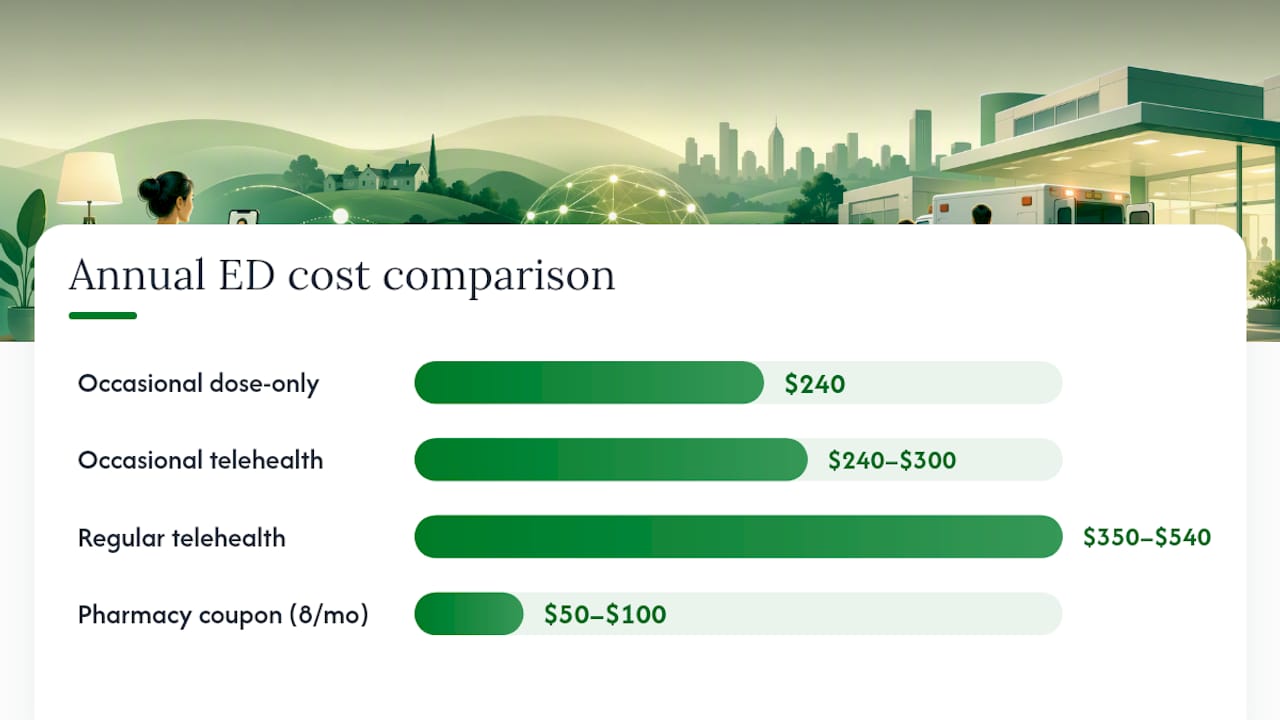
Now do the math for your own use pattern. An occasional user taking four doses a month at a telehealth generic price of roughly $5 per dose is looking at about $20 a month before subscription fees, or somewhere near $240 to $300 a year once the platform fee gets added. A regular user at eight doses a month doubles that dose cost, but often qualifies for a lower per-pill rate on higher-volume plans, so the annual total tends to land closer to $350 to $540 rather than doubling outright. Run the same eight-dose pattern through a pharmacy coupon at $0.50 to $1 per tablet, and you’re paying somewhere between $50 and $100 a year for the identical medication. The dose count barely changes; the channel changes everything.
What Does Telehealth Pricing Actually Include?
A telehealth subscription isn’t just buying you pills. It’s buying a bundle, and understanding what’s inside that bundle explains why the price sits where it does. According to a peer-reviewed look at U.S.-based direct-to-consumer ED platforms, most services package these pieces together:
- The medical consultation — a licensed provider reviews your health history and approves or denies the prescription.
- Async messaging access — the ability to message your provider between visits without booking a new appointment.
- Refill management — the platform tracks your prescription and queues renewals automatically.
- Standard shipping — discreet packaging delivered to your door, usually included in the base price.
That’s the honest version of the price tag. The dishonest version shows up in the fine print. Watch for expedited shipping charges tacked on at checkout, re-consult fees if you pause and want to restart, membership tiers that quietly upcharge for “priority” service, and cancellation flows designed to be slower than the sign-up flow. Promotional first-month pricing is another trap: a $25 introductory rate that jumps to $70 in month two can double your realized first-year total compared to the advertised price.
Pro Tip: Before you subscribe, check your account settings for an autoship toggle and turn it off if you only want a single order. Consumer audits consistently find autoship defaults and slow cancellation flows are the single biggest driver of costs running higher than advertised.
How Insurance and Medicare Affect ED Telehealth Costs
Medicare is the biggest source of confusion here, so let’s clear it up directly: Medicare Part D generally does not cover PDE5 inhibitors like sildenafil or tadalafil, based on CMS’s own prescription drug coverage guidance. If you’re on Medicare, plan to pay out of pocket regardless of whether you go through telehealth or a brick-and-mortar pharmacy, and a partner resource on Medicare telehealth coverage is worth a read if you’re weighing which telehealth services Medicare does and doesn’t touch.
Private insurance is a mixed bag. Some plans cover a limited quantity of tablets per month; others exclude ED medication from the formulary entirely or require prior authorization that can take days.
- If your insurer covers ED medication with a reasonable copay, a primary care visit plus a local pharmacy fill is usually your cheapest option.
- If your plan excludes ED drugs outright, comparing the pharmacy coupon floor against telehealth’s bundled convenience becomes the real decision.
- If you need same-day access without waiting for a specialist referral, telehealth’s speed can offset its premium, especially for a first-time prescription.
How to Lower Your ED Telehealth Spending: A Step-by-Step Checklist
You don’t have to choose between convenience and a reasonable bill. Most men can get both by treating the telehealth visit as a one-time gateway rather than a permanent subscription.
- Book a single telehealth consult to get the prescription. You need a licensed provider’s approval regardless of where you eventually fill it, so start here rather than at a pharmacy counter. Our guide on getting a sildenafil prescription online walks through what that first visit covers.
- Ask the provider to send the script to a low-cost pharmacy. Cost Plus Drugs and GoodRx routinely beat telehealth subscription pricing for the identical generic tablet.
- Compute your own 12-month number before committing to anything. Multiply your typical doses per month by the per-dose price, multiply by 12, then add any subscription fee and shipping. That single calculation tells you more than any marketing page.
- Check the checkout screen for a pre-checked autoship box. If you only want one order, uncheck it. If you do want ongoing supply, set a calendar reminder two weeks before your next renewal so you’re not surprised by a promotional rate expiring.
- Ask your provider about a 90-day fill. Larger quantities usually lower the effective per-dose price and cut down on refill or re-consult fees.
- Ask about dose-splitting where clinically appropriate. Tadalafil in particular is sometimes prescribed at a higher milligram strength that a pharmacist can split, effectively doubling your supply for the same price, though this should only be done on your provider’s direction.
- Use any discount card or insurance benefit you already have, even if your plan doesn’t formally cover ED medication, since some discount programs stack on top of cash pricing.
Pro Tip: Treat your first telehealth visit like a one-time consultation fee, not a recurring bill. A standalone U.S. virtual visit typically runs $40 to $90, and once you have the prescription in hand, you’re free to shop the fill wherever it’s cheapest.
Same Medication, Different Price Tags: What You’re Really Paying For
Sildenafil and tadalafil are the same molecules whether you get them from a $9 discount pharmacy fill or a $20-a-dose compounded chewable. The difference in price traces back to two things: the service wrapper discussed earlier, and a regulatory distinction that matters more than most marketing pages admit.
- FDA-approved generic sildenafil/tadalafil at discount pharmacies: cents to roughly $1 per tablet.
- The same generics through mainstream telehealth platforms: $2 to $8 per dose, service fee included.
- Compounded chewables and sublinguals sold through telehealth: $5 to $25 per dose, a format premium that one 2026 pricing review documented running as high as $0.19 to $25 a dose across the market.
That last category deserves a caution. FDA-approved finished products go through a formal approval process for manufacturing consistency and dosing accuracy. Compounded products fall under a different oversight framework known as 503A compounding, which allows pharmacies to customize formulations, such as a chewable or dissolvable version, but without the same finished-product approval standard. A high price on a compounded chewable doesn’t mean it works better than an FDA-approved tablet costing a fraction as much. It usually just means you’re paying for format and delivery, not stronger medicine.
A Publisher’s Take on Pricing ED Telehealth Fairly
Same-day telehealth access, integrated pharmacy fulfillment, and insurance partnerships all exist to cut your total cost, not pad it. Transparent billing and proper telehealth consent safeguards should be standard, not a selling point.
— Bryan
Getting ED Treatment Through Topweightlossmed Without the Pricing Surprises
This platform offers an alternative to guessing at a subscription’s real annual cost. Same-day appointments can reduce wait times for prior authorization or callbacks, and insurance partnerships can allow patients with coverage that includes ED medication to apply it instead of paying full cash price by default.
An ED telehealth visit can follow the recommended checklist: one consultation, a clear prescription, and the option to fill it through the platform’s fulfillment or transfer it elsewhere if that’s cheaper. Shipping costs and any subscription terms may be disclosed before payment, and generic fills can keep the per-dose price closer to the pharmacy price than to compounded product premiums. If you want to see how the math works out for your own dose pattern, visit the ED telehealth page and compare it against whatever coupon price you’ve already found. Whether you land on the platform’s subscription or its discount fill, you’ll know the exact per-dose number before you commit to anything.
FAQ
How much does ED medication cost online?
Generic sildenafil or tadalafil through a discount pharmacy coupon can cost as little as a few cents to about $1 per tablet, while the same medication through a mainstream telehealth subscription typically runs $2 to $8 per dose once fees are included.
Can I get ED medication through telehealth?
Yes. Licensed telehealth providers, including Topweightlossmed, can evaluate your symptoms, prescribe generic or compounded ED medication, and arrange delivery or pharmacy pickup, all without an in-person office visit.
How much do telehealth visits typically cost?
A standalone U.S. virtual doctor visit generally costs $40 to $90 when billed on its own, though many ED-focused platforms bundle that consultation fee into a monthly subscription price instead.
Does insurance or Medicare cover ED telehealth treatment?
Medicare typically does not cover PDE5 inhibitors like sildenafil or tadalafil, and private insurance coverage for ED medication varies widely by plan, often requiring prior authorization or excluding it from the formulary entirely.
Is telehealth or an in-person doctor cheaper for ED treatment?
For occasional users, a one-time telehealth or primary care consult followed by a pharmacy coupon fill is usually cheapest; for regular users who value bundled refills and provider messaging, a telehealth subscription’s convenience can offset its higher per-dose price.