Most basic virtual doctor visits in the U.S. run about $40 to $90 out of pocket, with your final price set mainly by three things: whether you have insurance, what kind of visit you need, and whether you’re paying by message or video. A quick text-based check-in through a platform like Topweightlossmed can cost a relatively low fee, while insured patients using a plan like UnitedHealthcare’s virtual visit benefit may pay moderate copays per visit.
TL;DR:
- Message-based telehealth visits typically start at around $29 and are suitable for simple, non-urgent questions requiring no live consultation.
- Live video and urgent-care visits generally range from $34 to $99, with primary care intakes costing more than follow-ups, especially for new patients.
- Mental health and specialist consultations tend to have higher prices due to longer appointment times and specialized expertise, often exceeding general primary care rates.
- Insurance coverage usually reduces out-of-pocket expenses, with some plans charging flat copays between $15 and $40, while fee details depend on plan specifics.
- Payment models vary from pay-per-visit to subscriptions, with subscriptions being more cost-effective for frequent or ongoing care management.
Table of Contents
- How Much Does a Virtual Doctor Cost Without Insurance?
- How Does Cost Change by Visit Type?
- Per-Visit, Message-Based, or Subscription: Which Pricing Model Wins?
- Does Insurance Cover Virtual Doctor Visits?
- What Hidden Fees Should You Watch For?
- How Do I Find the Cheapest Responsible Option?
- How Does Topweightlossmed Approach Telehealth Pricing?
- Does Location or Provider Reputation Change the Price?
- Does the App or Platform You Use Affect the Price?
- Where Is Virtual Care Pricing Headed?
- Why I’d Rather See Patients Build a Virtual Primary-Care Relationship Than Chase One-Off Visits
- Ready to Check Your Virtual Care Costs?
- Sources
- FAQ
How Much Does a Virtual Doctor Cost Without Insurance?
Cash-pay telehealth pricing generally divides into different tiers based on visit type, without specifying exact amounts, and knowing which tier fits your problem saves you from overpaying for a five-minute question. Message-based care sits at the bottom of the market. Live video visits cost more but cover more ground. Urgent-care and primary-care intakes sit at the top of the “basic visit” category before you even get into specialists.
Message-only visits, where you describe symptoms through an app and a provider responds without a live call, often start around $29 according to Zocdoc’s telehealth pricing breakdown. That price usually covers a simple assessment, not a prescription or lab order. Live video visits are the workhorse of telehealth, typically priced from the mid $30s to around $99 depending on the platform and whether a same-day slot is involved. Urgent-care video visits for things like sinus infections or minor injuries tend to land in the middle of that range, while a full primary-care intake, the kind where a provider builds your history from scratch, usually costs more than a routine follow-up.
Typical cash-pay band: Most straightforward telehealth visits fall between $40 and $90, with message-based care as low as $29 and some national platforms charging up to $99 for video visits, per ThePricer’s cost analysis.
- Message-based review: roughly $29 and up
- Basic live video visit: roughly $34 to $99
- Urgent-care video visit: often in the $50 to $90 range
- Primary-care intake: usually priced higher than routine follow-ups
How Does Cost Change by Visit Type?
Not all virtual visits are priced the same, and matching your medical need to the right format keeps you from paying specialist-level prices for a routine question.
Primary care intake visits, where a provider reviews your full history for the first time, typically cost more than follow-up visits with the same provider. That gap exists because intakes take longer and involve more clinical decision-making. Urgent-care virtual visits for acute issues like rashes or minor infections usually track close to the general $40 to $90 band, though evening or weekend appointments sometimes carry a premium.
Mental health care shifts the numbers upward. Therapy sessions and psychiatric evaluations often start higher than a general medical visit because sessions run longer and involve more clinical complexity, according to TelehealthNavigatorAI’s cost guide. A psychiatry intake, in particular, tends to cost noticeably more than an ongoing medication-management follow-up. Specialist consults, dermatology, endocrinology, cardiology, generally cost more than primary care across the board, since you’re paying for narrower expertise and often a longer appointment slot.
- Primary care intake: higher than follow-up visits
- Urgent care: near the $40 to $90 general band, with after-hours premiums
- Therapy/psychiatry: intakes cost more; follow-ups run lower
- Specialists: typically priced above general primary care
Per-Visit, Message-Based, or Subscription: Which Pricing Model Wins?
Telehealth platforms sell access to care in three basic shapes, and the right one depends entirely on how often you expect to need a doctor.
- Pay-per-visit works best if you see a doctor a few times a year. You pay only when you use it, with no ongoing commitment.
- Message-based care is the cheapest single-use option, ideal for simple, non-urgent questions that don’t need a live conversation.
- Subscription or membership plans, often priced around $50 to $100 a month for primary-care-style unlimited access according to Doseway’s telehealth cost breakdown, make sense if you’re managing a chronic condition or expect frequent check-ins.
Pro Tip: Add up how many virtual visits you actually used last year before committing to a monthly membership. If it’s fewer than four or five, pay-per-visit almost always costs less.
Employer-sponsored plans sometimes fold virtual visits into a flat per-paycheck benefit, which can make a subscription model effectively free if your job already offers it.
Does Insurance Cover Virtual Doctor Visits?
Your insurance structure decides more of your final bill than the visit itself does. A copay plan might charge you a flat $15 to $40 regardless of the provider’s rate, while a coinsurance plan has you pay a percentage of the negotiated cost, and a high-deductible plan may have you pay the full negotiated rate until you hit your deductible.
Medicare currently allows beneficiaries to receive many telehealth services from home through December 31, 2027, though Medicare notes you may still owe standard coinsurance or deductible amounts depending on your specific coverage. That’s a meaningful extension worth knowing about if you’re on Medicare and weighing virtual versus in-person care.
On the employer-plan side, UnitedHealthcare publishes that many of its 24/7 virtual visits typically cost members $54 or less, though your actual out-of-pocket depends on your specific plan design.
Before booking, confirm these in your insurer’s member portal:
- Whether the specific platform or provider is in-network
- Your copay or coinsurance percentage for telehealth specifically
- Whether you’ve met your deductible for the year
- Whether the visit type (mental health, specialist, urgent care) has a different cost tier
What Hidden Fees Should You Watch For?
The advertised visit price is rarely the whole bill. Prescriptions get billed separately by your pharmacy, and if a provider orders labs or imaging, those charges come from a separate lab or facility, not the telehealth platform.
Facility fees are another surprise. A virtual visit through a hospital-affiliated system sometimes carries a separate facility charge on top of the professional fee, something a standalone telehealth platform typically doesn’t add. Watch for these extra charges:
- Pharmacy costs for any prescribed medication
- Lab or imaging fees billed by a separate provider
- Facility fees from hospital-affiliated telehealth programs
- Cancellation or no-show fees for missed appointments
- Delivery charges if medication ships to your home
How Do I Find the Cheapest Responsible Option?
Comparing telehealth options gets easier when you work through it in order rather than just picking the first result that shows up.
- Confirm the visit format first. Message-based, video, and what’s included, prescriptions or not, before you compare price tags.
- Check network status and your plan’s cost-sharing. An in-network visit with a $54 copay beats an out-of-network cash price every time.
- Weigh a subscription against your expected usage. Frequent visits or chronic condition management often make a membership worth it.
- Look into sliding-scale or community clinics if you’re uninsured or on a limited income; many offer virtual options priced by income bracket.
Pro Tip: Call the number on your insurance card before booking anything non-urgent. A five-minute call can tell you your exact copay and save you from an unpleasant billing surprise later.
How Does Topweightlossmed Approach Telehealth Pricing?
Topweightlossmed built its platform around one practical problem: patients managing more than one health issue often bounce between separate apps, separate providers, and separate bills. TWL folds weight loss, primary care, mental health, and erectile dysfunction care into one platform with same-day appointment availability, so you’re not paying for redundant intake visits across multiple services.
Care happens remotely, with medication delivery built into the process when a prescription is appropriate, which cuts out a separate pharmacy trip for many patients. That structure matters most for people managing overlapping conditions, weight loss alongside a mental health concern, for instance, since continuity across visits often reduces the number of separate intake fees you’d otherwise pay.
- Integrated care across weight loss, primary care, mental health, and ED
- Same-day booking with remote consultations
- Medication delivery built into treatment plans
For more on what a virtual primary-care visit actually covers, see what you can get done virtually, or check psychiatry coverage details if mental health care is part of your plan.
Does Location or Provider Reputation Change the Price?
Telehealth pricing is more uniform across state lines than in-person care, but it’s not perfectly flat. A dermatologist in a major metro market with a long client waitlist can charge more for a video consult than a general telehealth platform charges for the same specialty, simply because demand supports it. Regional cost-of-living differences that drive in-person pricing (a doctor’s visit in Manhattan costing more than the same visit in rural Ohio) matter less for virtual care, since providers on national platforms usually charge one rate regardless of where the patient is located.
Provider reputation plays a bigger role than geography in most cases. A well-known specialist or a platform with strong brand recognition can charge toward the top of the posted range, while a smaller telehealth startup competing for market share often prices at the bottom to attract new patients. State licensing rules add a wrinkle too: providers must be licensed in the state where the patient is physically located during the visit, which occasionally limits which platforms are even available to you and can narrow your options in smaller states with fewer participating providers.

The practical takeaway is simple. Don’t assume a big-city provider costs more just because rent is higher there. Compare the actual posted rate, and if a platform’s price seems unusually low or high compared to the $40 to $90 general band, ask what’s included before assuming it’s a bargain or a rip-off.
Does the App or Platform You Use Affect the Price?
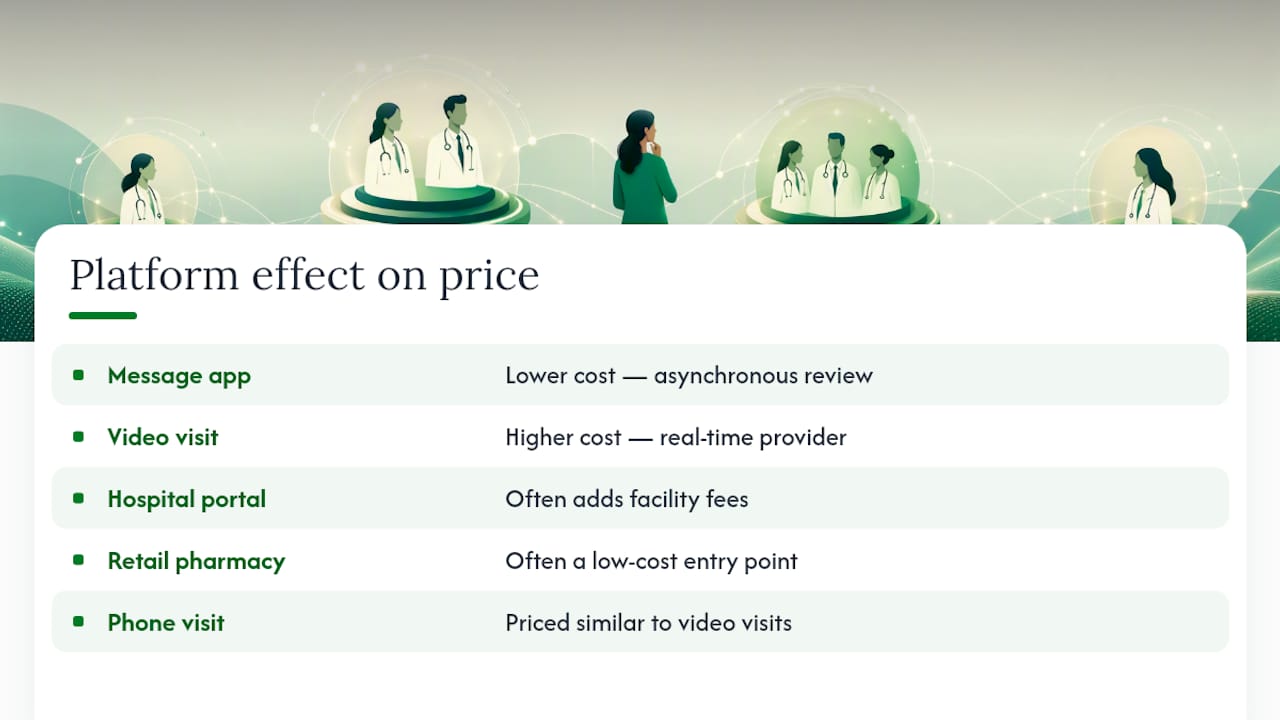
The technology behind your visit shapes the price more than most patients realize. A basic message-based app, where you type symptoms and wait for a written response, costs less to run than a live video platform, and that savings usually gets passed to you. Video visits cost more partly because they require real-time provider availability, which is a scarcer resource than asynchronous message review.
Standalone telehealth apps built specifically for virtual care tend to price lower than telehealth features bolted onto a hospital system’s patient portal, since hospital systems often layer facility fees on top of the visit charge. A retail pharmacy’s virtual care option, the kind you might see advertised at a chain pharmacy counter, sometimes acts as a low-cost entry point precisely because the company already has your prescription and delivery infrastructure in place.
Phone-only visits, less common now than a few years ago, still exist for patients without reliable video access, and they’re generally priced the same as video visits despite the lower technical overhead. The platform’s app quality also affects your total cost indirectly: a clunky app that drops calls or requires a callback can turn a $50 visit into two billed encounters if you have to start over with a different provider.
Where Is Virtual Care Pricing Headed?
Telehealth pricing is trending toward more transparency, not less. More platforms now post their exact per-visit price on the landing page before you create an account, a shift away from the “call for pricing” model that frustrated patients for years.
Subscription and membership models are gaining ground as more employers add virtual primary care as a standard benefit rather than an optional add-on. That shift could push per-visit cash prices down over time as platforms compete on membership value instead of one-off transaction fees. Medicare’s telehealth flexibilities, extended through the end of 2027, also signal that federal policy is leaning toward keeping virtual care accessible rather than letting temporary pandemic-era rules quietly expire.
Expect continued price compression at the low end, message-based care getting even cheaper, while specialty and mental health virtual visits likely hold steady or rise slightly as demand for those services keeps growing faster than provider supply. Research on telehealth implementation has already found it can lower costs and remove access barriers for the right conditions, a trend that PMC’s review of telehealth outcomes suggests will keep pushing routine, low-complexity care toward virtual-first models.
Why I’d Rather See Patients Build a Virtual Primary-Care Relationship Than Chase One-Off Visits
One-off urgent-care visits make sense for a single problem, but patients juggling more than one condition almost always spend less over a year with an ongoing virtual primary-care relationship or subscription. Each new one-off visit means paying for another intake. Pick a subscription or standing provider once you’re managing something recurring, weight, mental health, chronic conditions, and pay per-visit only for genuinely isolated issues.
— Bryan
Ready to Check Your Virtual Care Costs?
Comparing per-visit apps and hospital portals only gets you so far when you’re managing more than one health concern at a time. Topweightlossmed is built for exactly that situation: one platform covering primary care, weight loss, mental health, and erectile dysfunction, with same-day appointments and medication delivery included, so you’re not juggling separate logins, separate intake fees, and separate pharmacy runs for related health goals.
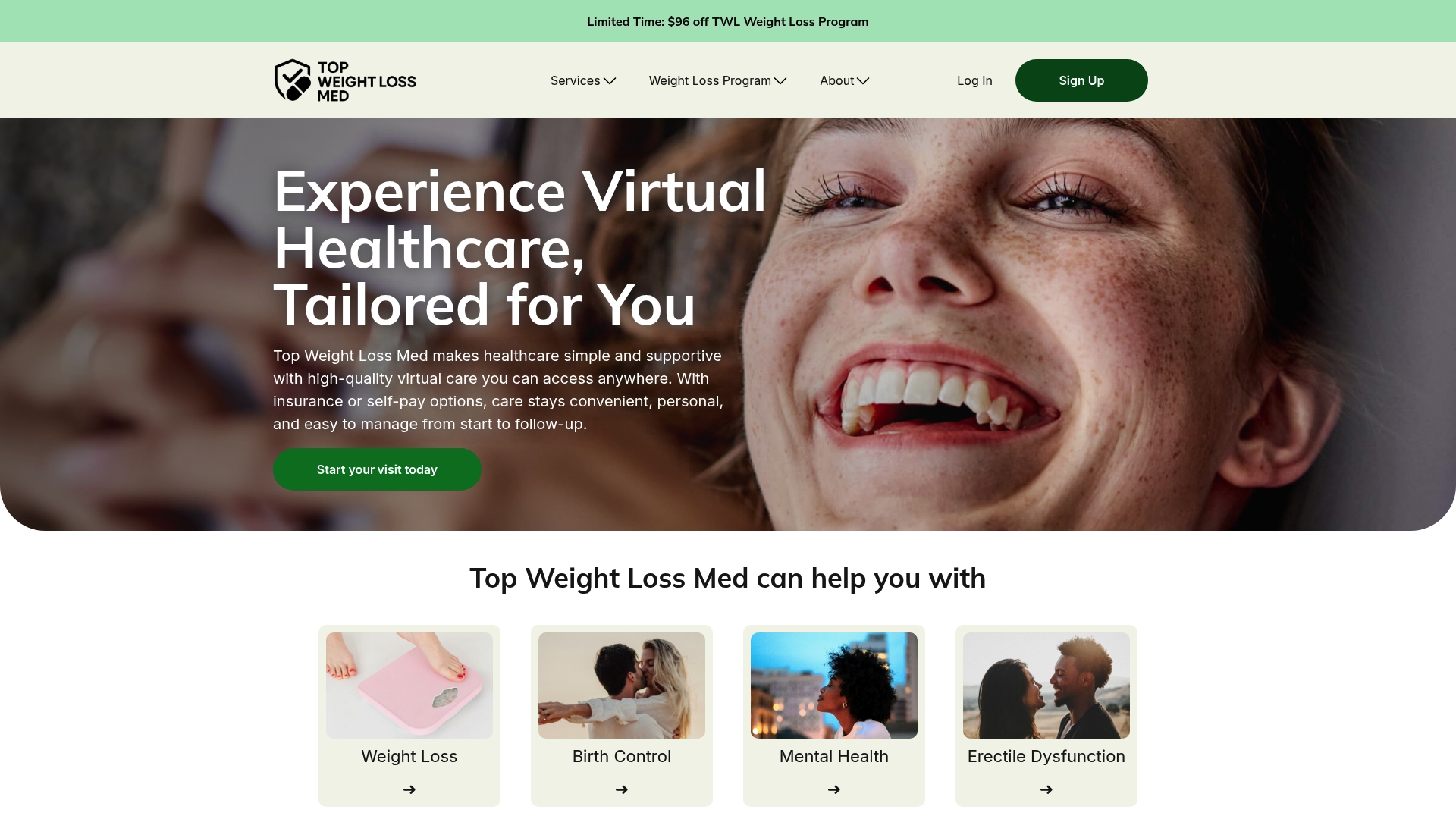
Some telehealth platforms work with insurance, which can reduce out-of-pocket costs compared to full cash-pay rates. If weight loss is part of what you’re managing, you can check your options and pricing directly on TWL’s weight-loss page, or explore the primary care landing page to see how same-day virtual appointments work before you book your first visit.
This article is general information, not a substitute for advice from a qualified doctor. Consult a qualified healthcare professional about your own circumstances before acting on anything here.
Sources
- Medicare
- Complete guide to cost of telehealth visits — Zocdoc
- UnitedHealthcare 24/7 Virtual Visits member FAQ (PDF)
- How much does a telehealth visit cost without insurance? — ThePricer
FAQ
Is It Cheaper to Do a Virtual Visit Than See a Doctor in Person?
Yes, in most cases. A typical virtual visit costs $40 to $90 without insurance, compared to often higher costs for an in-person urgent-care or new-patient primary-care visit once facility fees are included.
How Much Do Doctors Charge for a Telehealth Visit?
Providers commonly charge between $29 for message-based care and up to $99 for a live video visit, with psychiatry and specialist consults typically priced higher.
What’s the Cheapest Virtual Doctor Visit Without Insurance?
Message-based care is generally the lowest-cost option, starting around $29, though it’s best suited for simple, non-urgent questions rather than complex diagnoses.
Does Insurance Still Cover Telehealth Visits?
Yes. Medicare continues covering telehealth from home through December 31, 2027, and many private and employer plans, including UnitedHealthcare’s virtual visit benefit, cover virtual visits at reduced member rates.
Does Topweightlossmed Accept Insurance for Virtual Visits?
Topweightlossmed partners with major insurance companies to help reduce out-of-pocket costs, and patients can confirm specific coverage details directly through the platform before booking.