Most clinical trials measure results at 12 weeks, though the sources do not establish that improvement continues through week 15. For many people with mild to moderate rosacea, it stands as one of the better-studied topical options available.
TL;DR:
- Prescription 15% gel or foam is the studied standard for active inflammatory rosacea; over the counter serums and suspensions may suit maintenance or reactive skin.
- Apply a thin layer twice daily to dry skin across the affected area; ask a clinician about changes if improvement is absent after 12 weeks.
- Burning or stinging affects about 29% of patients using Finacea gel; reactions usually ease, but severe or persistent irritation warrants clinician contact.
- A 15 week trial reported lesion reductions of 72.7% with azelaic acid and 55.8% with metronidazole, but a 2024 analysis found comparable overall effects.
Table of Contents
- What the clinical trials and reviews show
- Formulations and how to get them: prescription vs OTC
- How to use azelaic acid safely and effectively
- Side effects, warnings, and precautions
- How azelaic acid stacks up against metronidazole and other topicals
- When to seek medical care and how remote visits can help
- A clinician’s perspective on patience and adherence
- Getting evaluated and prescribed through Top Weight Loss Med
- FAQ
- Sources
What the clinical trials and reviews show
The trial data behind azelaic acid is substantial for a topical rosacea treatment. In one head-to-head study, azelaic acid produced a 72.7% decrease in inflammatory lesions compared with 55.8% for metronidazole after 15 weeks, a meaningful gap between two drugs often grouped together as first-line options.
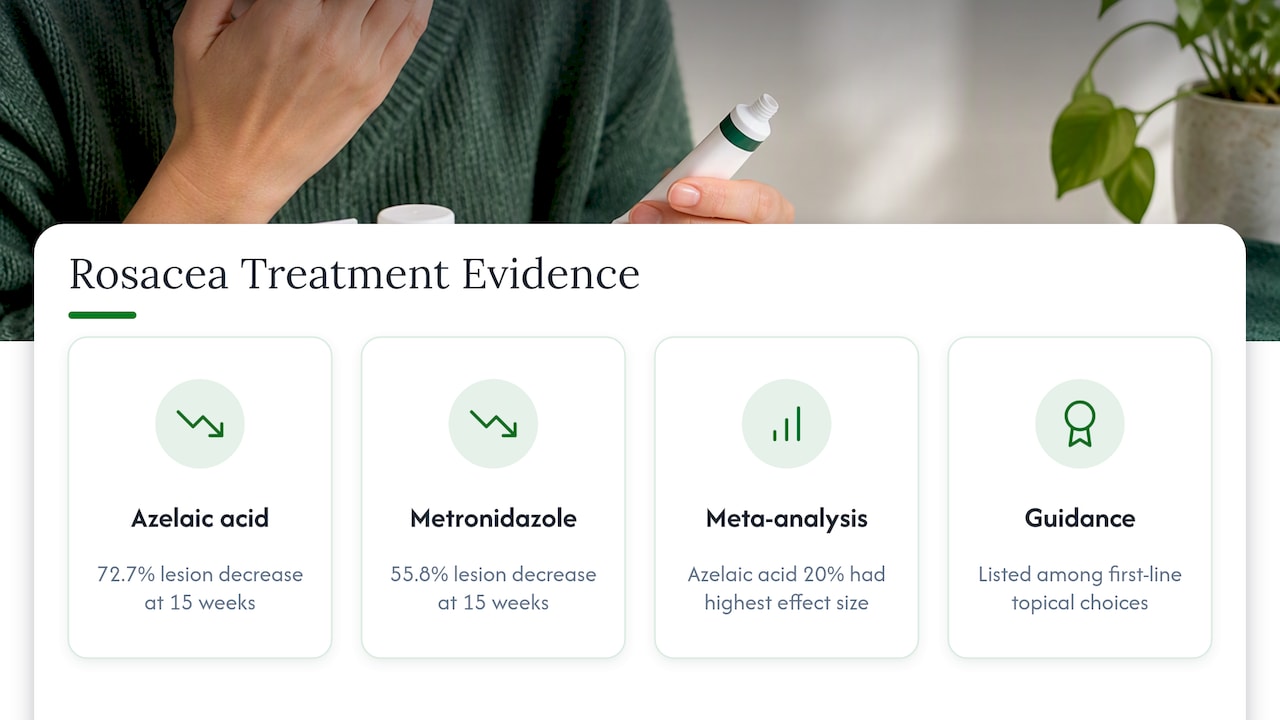
A 2024 network meta-analysis found azelaic acid 20% produced the highest effect size for physician-assessed improvement among topical agents studied, while azelaic acid 15%, metronidazole 0.75%, and ivermectin 1% showed comparable effect sizes to each other, according to a systematic review and network meta-analysis.
The National Rosacea Society lists azelaic acid among the first-line topical choices its expert committee recommends, often paired with oral antibiotics early in treatment and continued afterward as maintenance therapy. Taken together, the trial data and the expert consensus point in the same direction: azelaic acid is not a fringe remedy but a mainstream, studied option for papulopustular rosacea.
Formulations and how to get them: prescription vs OTC
Azelaic acid comes in several strengths and vehicles, and the differences matter more than most people expect.
- Finacea Gel, 15% is FDA-approved for inflammatory papules and pustules and was the formulation studied in the pivotal trials behind its approval, per the Finacea gel label.
- Finacea Foam, 15% showed similar efficacy in reducing inflammatory lesions when applied twice daily for 12 weeks in FDA review documents, and many patients prefer its lighter texture.
- 20% cream formulations appear in some studies and reviews.
- OTC serums and suspensions use different vehicles and may be a reasonable option for maintenance or for skin that reacts to stronger formulas.
The practical takeaway: prescription 15% gel or foam is the standard, studied dose for active inflammatory rosacea, while OTC versions fit better once symptoms are under control.
How to use azelaic acid safely and effectively
Getting the application right affects both how well it works and how much irritation you experience along the way.
- Cleanse your face with a mild, soap-free cleanser and pat it completely dry.
- Apply a thin layer of azelaic acid to the entire affected area, not just individual bumps.
- Use it twice daily, morning and evening, unless your clinician tells you otherwise.
- Wash your hands after application to avoid spreading it to your eyes.
- Let the product fully absorb before applying moisturizer or makeup.
Most of the major trials used a 12-week primary endpoint, and the FDA’s review of Finacea Foam confirms meaningful improvement in papules and pustules by that point, though some patients keep improving through week 15. If you see no change after about 12 weeks, that is the natural point to check in with a clinician about adjusting the plan.
Pro Tip: If your skin is especially reactive, ask your clinician whether starting with less frequent application and increasing as tolerated is appropriate.
A few habits reduce early irritation: patch-test on a small area first, skip alcohol-based cleansers and harsh exfoliants while you build tolerance, and keep the product away from your eyes and lips.
Side effects, warnings, and precautions

Local irritation is the most common issue, and it is usually mild and temporary. According to the Finacea gel label, burning or stinging occurs in about 29% of patients, with pruritus in about 11%, scaling or dry skin in about 8%, and erythema or irritation in about 4%. These reactions may ease with continued use.
A few precautions matter more than the general side effect list:
- Avoid getting the product in your eyes, since accidental exposure can cause serious irritation.
- Stop use and contact a clinician if irritation becomes severe or does not improve.
- Watch for rare reports of lightened skin patches, especially if you have darker skin, since data in this group is more limited.
If you experience eye exposure that affects your vision, or you notice signs of infection like spreading redness or warmth, reach out to a clinician promptly. For gentler, non-pharmacologic ways to calm reactive skin between applications, some patients also use natural soothing strategies alongside their prescribed routine.
How azelaic acid stacks up against metronidazole and other topicals
Azelaic acid and metronidazole are both considered first-line topical treatments, but the data shows some real differences.
- In the 15-week trial mentioned earlier, azelaic acid outperformed metronidazole on lesion-count reduction, though both drugs produced meaningful improvement.
- The 2024 network meta-analysis found azelaic acid 15% and metronidazole 0.75% had comparable overall effect sizes, with azelaic acid 20% ranking highest for physician-assessed severity improvement.
- Tolerability profiles differ: azelaic acid carries a higher likelihood of transient stinging, while metronidazole tends to be gentler but sometimes slower to show results.
Neither drug is universally better. A comprehensive pharmacological review notes that 15% to 20% azelaic acid formulations deliver clinically meaningful improvement with mostly mild, transient irritation, which supports its place as a go-to option rather than a second choice. The right pick often comes down to how your skin responds and what a clinician observes at follow-up.
When to seek medical care and how remote visits can help
Certain signs call for a clinician’s input rather than more time on a drugstore shelf:
- Moderate to severe papules and pustules that have not responded to over-the-counter products.
- Symptoms that worsen quickly or spread beyond the usual cheeks and nose.
- Eye involvement, such as grittiness, redness, or vision changes.
- Uncertainty about whether what you’re seeing is actually rosacea.
Online visits make this evaluation accessible without a trip to a dermatologist’s office, often with convenient scheduling and a prescription sent straight to your pharmacy.
A clinician’s perspective on patience and adherence
The biggest factor separating patients who see results from those who give up early is time. Most meaningful improvement shows up between weeks 8 and 12, not days. Mild stinging can occur, but contact a clinician if irritation is severe or concerning. Stick with gentle adjustments, like spacing out applications, before abandoning the treatment, and loop in a clinician if progress stalls; the Finacea foam label advises reassessing if there is no improvement after 12 weeks.
— Bryan
Getting evaluated and prescribed through Top Weight Loss Med
We offer virtual appointments that let you get an evaluation without needing an in-person visit.
The process is straightforward: complete an online intake describing your symptoms and history, meet with a provider through a virtual visit, and receive guidance after your visit. We can discuss how your skin is responding and whether adjustments may be appropriate.
- Skip the waiting room and get assessed from home.
- Have your prescription sent directly to a pharmacy near you.
- Discuss your progress and possible adjustments with a provider.
If redness and bumps have been bothering you, our skincare page is the place to start, or book a broader primary care visit if you’d rather address rosacea alongside other health concerns in one appointment.
This article is general information, not a substitute for advice from a qualified doctor. Consult a qualified healthcare professional about your own circumstances before acting on anything here.
FAQ
How long do you use azelaic acid for rosacea?
Most clinical trials measure results at 12 weeks, and clinical studies report results after 15 weeks of treatment. Beyond the initial treatment period, azelaic acid is often continued long-term as maintenance therapy to help prevent flare-ups, based on National Rosacea Society guidance.
What are the downsides of azelaic acid?
The most common issues are local skin reactions: burning or stinging, itching, and dryness, which the Finacea gel label reports in a meaningful share of users. These reactions are usually mild and may ease with continued use, though you should avoid eye contact and watch for rare skin lightening, especially with darker skin tones.
Which is better for rosacea, azelaic acid or metronidazole?
Both are considered first-line topical treatments with comparable overall effectiveness in recent analyses, though one trial found azelaic acid produced a larger reduction in inflammatory lesions than metronidazole over 15 weeks. The better fit often depends on how your skin tolerates each one, which is something a clinician can help you figure out.
What form of azelaic acid is best for rosacea?
Over-the-counter formulations vary; ask a clinician whether one is appropriate for maintenance once active symptoms are controlled.
Sources
- Pubmed
- The efficacy and safety of minocycline, metronidazole, ivermectin, and azelaic acid in moderate-to-severe papulopustular rosacea: A systematic review and network meta-analysis
- 207071Orig1s000
- Finacea (azelaic acid) gel label