Yes, you can get prescription-strength hyperpigmentation treatment online in the United States when a clinician determines it’s appropriate for your skin. Telederm visits typically lead to regimens built around topical hydroquinone combinations, tretinoin, azelaic acid, or tranexamic acid, depending on what’s causing the discoloration. None of it works without two things: consistent follow-up so your provider can adjust the plan, and daily sun protection, since unprotected skin will undo months of progress in an afternoon.
TL;DR:
- Regular follow-up appointments are essential to adjust prescriptions and maintain progress, with check-ins typically scheduled every six to twelve weeks.
- Combining agents like hydroquinone, tretinoin, azelaic acid, or tranexamic acid yields better results than single treatments, especially when paired with comprehensive skin care.
- Sun protection, especially with tinted sunscreens containing iron oxide, is critical to prevent reversing months of pigmentation treatment.
- Safe prescription use depends on individual factors such as pregnancy, dark skin tones, and any changing or irregular lesions requiring in-person evaluation.
- Trustworthy teledermatology for hyperpigmentation involves board-certified providers experienced in diverse skin tones and a structured follow-up plan.
Table of Contents
- How Online Dermatology for Hyperpigmentation Works
- What Prescription Ingredients Actually Treat Hyperpigmentation?
- Is It Safe? Contraindications and Special Situations to Know
- How Long Until You See Results?
- How to Choose a Provider You Can Trust
- How Top Weight Loss Med Approaches Integrated Dermatology Care
- A Clinician-First Take on Getting This Right
- Start a Prescription Hyperpigmentation Consult
- Sources
- FAQ
How Online Dermatology for Hyperpigmentation Works
A telederm visit for dark spots follows a fairly predictable sequence, though the details vary by platform.
- Intake. You’ll answer questions about your medical history, current medications, and prior treatments, then upload well-lit photos showing the affected area and your general skin tone.
- Clinical review. A board-certified provider evaluates whether you’re dealing with melasma, post-inflammatory hyperpigmentation (PIH), sun-related lentigines, or something else, since the cause determines the prescription approach.
- Prescribing decision. If your case fits a straightforward Rx pathway, the provider prescribes; if photos suggest something atypical, like an irregular or changing lesion, they’ll redirect you to in-person care.
- Fulfillment. Prescriptions route to a standard retail pharmacy or, for combination formulas, a compounding pharmacy, with shipping times typically ranging from a few days to one week.
- Follow-up. Most platforms schedule a check-in around six to twelve weeks out to gauge response and adjust strength or ingredients.
This structure matters because teledermatology works best when the platform builds in scheduled follow-up rather than treating the prescription as a one-time transaction. A single prescription with no check-in is a weaker version of the same service.
What Prescription Ingredients Actually Treat Hyperpigmentation?
Most effective regimens use combinations of agents targeting different mechanisms of hyperpigmentation, including the best aging skin texture improvement ingredients relevant for topical hyperpigmentation regimens. Common prescription agents include hydroquinone, tretinoin, azelaic acid, topical tranexamic acid, and cysteamine, often combined cautiously with chemical peels or lasers as adjuncts. These approaches are generally more effective than single-ingredient products, but procedural treatments require careful consideration in darker skin due to risk of new pigmentation.
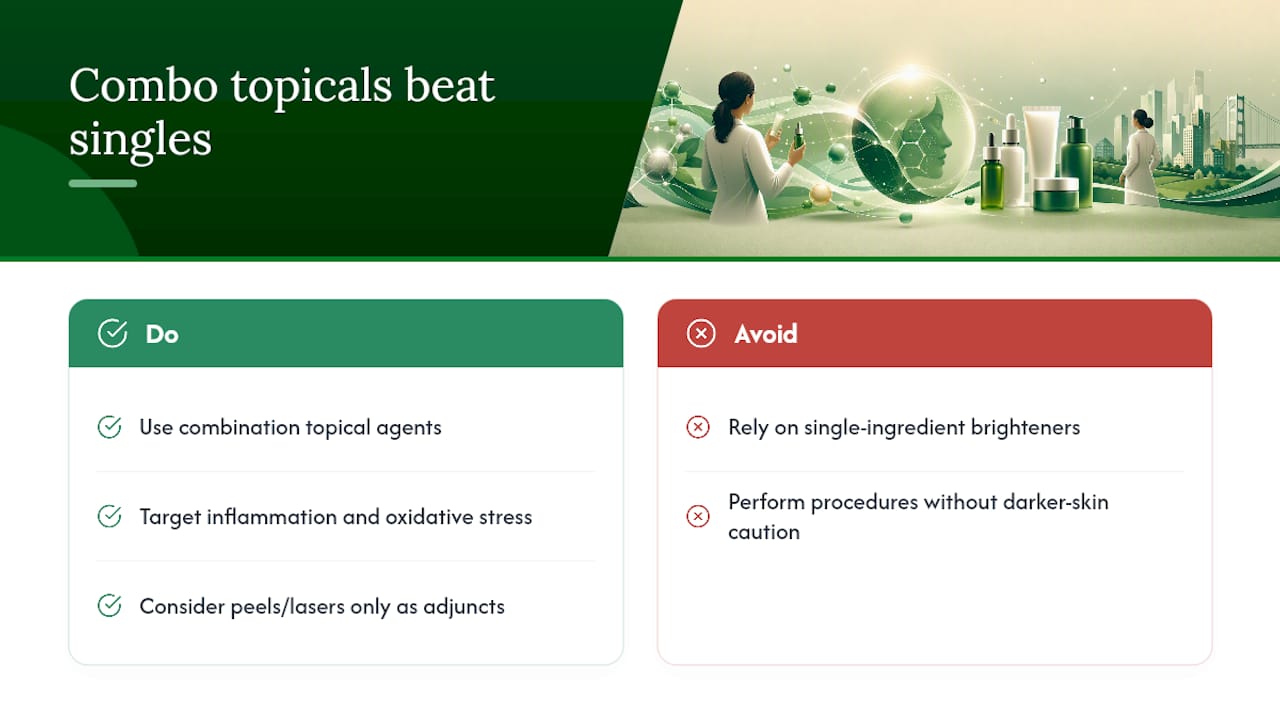
Here’s the part most over-the-counter shoppers miss: dark-spot creams marketed as simple “brighteners” rarely match what a combination prescription regimen can do. Clinical reviews consistently find that combination topical treatments, paired with real attention to the surrounding skin environment, outperform single-agent approaches for most hyperpigmentation disorders. Targeting inflammation and oxidative stress alongside pigment production, rather than pigment alone, is what separates a regimen that works from one that plateaus after a few weeks.
Is It Safe? Contraindications and Special Situations to Know
Hyperpigmentation treatment isn’t one-size-fits-all, and a handful of situations change what’s safe to prescribe.
- Pregnancy and breastfeeding. Several common agents, including tretinoin and hydroquinone, are typically avoided or used only under close supervision during pregnancy and nursing. Disclose your status honestly during intake; this isn’t a detail to gloss over.
- Topical steroids. Short courses are sometimes built into combination creams, but overuse or extended use raises the risk of skin thinning and, in rare cases, a paradoxical worsening of pigmentation. Providers monitor duration for exactly this reason.
- Darker skin tones. Higher Fitzpatrick phototypes face a real risk of developing new PIH after aggressive procedures like laser treatment, which is why conservative topical approaches and careful pre-treatment prep tend to be favored over jumping straight to devices.
- When to see someone in person. Any lesion that’s changing shape, bleeding, or asymmetric needs an in-office evaluation, not a telederm photo review, and irritation that doesn’t settle after a few weeks is also a signal to escalate.
Pro Tip: Photograph the area in the same lighting and angle each time you check in with your provider. Inconsistent lighting is the single biggest reason remote follow-up assessments go wrong.
How Long Until You See Results?
Patience matters more than most people expect walking into this.
- Weeks 1 through 6: Skin often adjusts to new actives during this window, with mild peeling or redness being common rather than a sign something’s wrong.
- Weeks 6 through 12: This is when most people notice the first real fading, and it’s typically when a provider reassesses and decides whether to hold steady or adjust strength.
- Months 3 through 6: Fuller results usually show up here, especially for melasma, which tends to respond more slowly than isolated sun spots or PIH.
- Ongoing maintenance: Once spots fade, many providers shift patients to intermittent topical use rather than stopping cold, paired with periodic check-ins to catch relapse early.
Daily broad-spectrum sunscreen isn’t optional maintenance, it’s the foundation the whole plan rests on. Dermatologists specifically recommend tinted sunscreens with iron oxide because visible light, not just UV, drives new pigment formation in melasma-prone skin.
How to Choose a Provider You Can Trust
Not every telederm platform handles hyperpigmentation the same way, so it’s worth screening a few things before you book.
- Confirm the clinicians are board-certified dermatologists or work under one, not just general telehealth providers reviewing skin cases as an afterthought.
- Ask directly whether the provider has experience treating your specific skin tone and condition, since melasma management in deeper skin differs from treating sun spots in fair skin.
- Find out the follow-up cadence upfront. A plan with a six-week check-in built in beats one that leaves you to self-monitor indefinitely.
- Ask whether prescriptions come from a standard retail pharmacy or a compounding pharmacy, and get clarity on what that means for cost and consistency.
- Check the refund and refill policy before you pay, especially for subscription models that auto-renew.
Hyperpigmentation care works best when it’s personalized to the depth of pigment, the underlying cause, and how consistently you stick with photoprotection, so a provider who asks detailed questions upfront is doing you a favor, not wasting your time.
How Top Weight Loss Med Approaches Integrated Dermatology Care
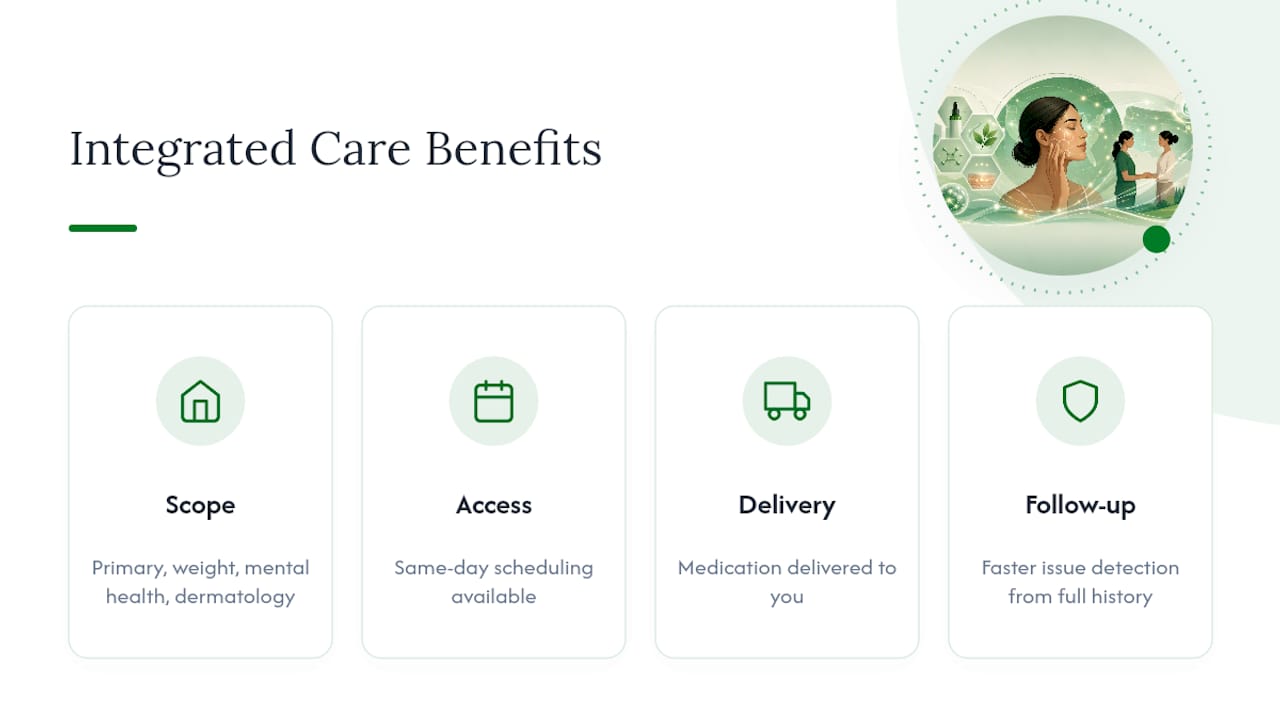
Topweightlossmed folds dermatology into a broader virtual care platform that already handles primary care, weight loss, and mental health, so a hyperpigmentation regimen doesn’t exist in isolation from the rest of your health picture. Same-day scheduling and medication delivery keep the process moving, and because your provider has access to your fuller history, follow-up visits tend to catch issues faster than a standalone skincare app would.
A Clinician-First Take on Getting This Right
Treating hyperpigmentation is iterative, not a one-time fix. The regimen that works at week six often needs tweaking by week twelve, and skipping sunscreen undoes more progress than any active ingredient can repair. Telehealth handles most cases well; anything that looks unusual on your skin deserves an in-person look.
— Bryan
Start a Prescription Hyperpigmentation Consult
Before booking, gather a few basics: clear photos of the affected areas in natural light, a list of current medications and skincare products, and a brief history of when the discoloration started and what’s made it better or worse. That prep speeds up the clinical review and gets you a more accurate plan on the first pass.

Topweightlossmed connects you with board-certified providers who can evaluate your skin, prescribe a combination regimen when appropriate, and arrange medication delivery so you’re not making a separate pharmacy trip. Because the platform also covers primary care and other conditions, any follow-up questions about how a new medication interacts with something else you’re taking stay within the same care team instead of getting lost between separate apps. If you’re ready to get a professional read on your skin and start a regimen built around your specific case, you can book a consultation through Topweightlossmed’s skincare services and get a same-day appointment on the calendar.
Sources
- Decoding Hyperpigmentation from Biological Mechanisms to Actives with Clinically Proven Topical Efficacy: A Narrative Review
- How to fade dark spots in darker skin tones — American Academy of Dermatology (AAD)
- Demystifying hyperpigmentation: Causes, types, and effective treatments — Harvard Health
This article is general information, not a substitute for advice from a qualified doctor. Consult a qualified healthcare professional about your own circumstances before acting on anything here.
FAQ
What Is the Best Over-the-Counter Product for Hyperpigmentation?
OTC options with niacinamide, vitamin C, or low-percentage retinol can help mild discoloration, but they generally work slower and less thoroughly than prescription combinations built around hydroquinone, tretinoin, or azelaic acid.
How Do Koreans Get Rid of Hyperpigmentation?
Many Korean skincare routines emphasize layered exfoliation, brightening actives like niacinamide, and rigorous daily sun protection, an approach that overlaps with dermatologist advice but typically moves slower than prescription-strength regimens for stubborn or deep pigmentation.
Can I Get a Hydroquinone Prescription Online?
Yes. Board-certified providers on U.S. telederm platforms can prescribe hydroquinone-based regimens after reviewing your photos and history, provided there’s no contraindication like pregnancy.
What Is the Most Effective Treatment for Hyperpigmentation?
There’s no single best treatment across every patient, but combination topical therapy, typically pairing hydroquinone or azelaic acid with a retinoid, alongside strict daily sunscreen, consistently outperforms single-ingredient approaches in clinical reviews.
Does Topweightlossmed Offer Hyperpigmentation Treatment?
This telehealth platform offers dermatology consultations, connecting patients with providers who can evaluate hyperpigmentation and prescribe topical regimens with medication delivery.